


Morning Report on the Egyptian Exchange and Financial Indicators Analysis - 28 September 2026
Morning Report on the Egyptian Exchange and Financial Indicators Analysis - 28 September 2026
Primary: General Context and Conditions
The Egyptian market is trading at a sensitive juncture where local and regional factors converge, pressuring trends and creating opportunities. The dollar‑to‑pound exchange rate remains a focal point for investors, recording 51.65 EGP for buying at Al‑Baraka Bank, amid general stability in banks with light selling pressure throughout the day. The Central Bank of Egypt’s decision to hold interest rates steady at 19% for deposits and 20% for lending has not escaped notice, sparking discussion about the impact of this stability on bank margins and fixed‑income products, while domestic liquidity continues to face dominance from government debt instruments that saw large foreign and Arab sales of $1.4 billion in a week, amplifying a decline in the main indices.
Internationally, expectations for the U.S. interest‑rate path diverged as inflation and oil price data varied, pushing 30‑year Treasury yields to levels not seen in two decades, while gold steadied around $4,200 per ounce, influenced by Federal Reserve outlook and prospects of further rate hikes. The global monetary tightening continues to exert pressure on high‑risk assets, whereas high‑yield government securities may offer a safe haven for cautious portfolios, especially after Egypt recorded a treasury bill coverage surplus of 141.3 billion EGP in a single auction.
Domestically, major questions arise regarding the real estate sector’s ability to adapt to new escrow accounting rules, as shares of small developers decline under liquidity and oversight requirements, while heavyweight banks such as Commercial International Bank (CIB) benefit from wide margins and strong assets. Today’s turnover exceeded 348 million EGP, excluding the intense liquidity sessions that surpassed 1 billion EGP last week, reflecting a shift of funds across asset classes.
Secondary: Exchange Index Analysis
At the close of today’s session on Sunday 27 September, the EGX30 fell 1.39% to settle at 54,200 points, while the EGX70 for small‑ and mid‑cap stocks contracted 3.87% to reach 4,850 points. Selling pressure prevailed during the session, with liquidity shifting toward short‑term government treasury bills that attracted foreign funds of $1.4 billion, reducing the depth of local participation in the market.


Technically, the main index broke below the 55,000‑point support level and pierced the 54,500‑point barrier, opening the way for a test of the 53,800–53,500‑point zone in upcoming sessions, unless new catalysts emerge such as a strong move from the central bank or an improvement in foreign investor sentiment. The 50‑ and 200‑day moving averages indicate a medium‑term downward trend, while the RSI stands at 42.
Third: Key Stock Analysis
#### 1. Commercial International Bank (COMI)
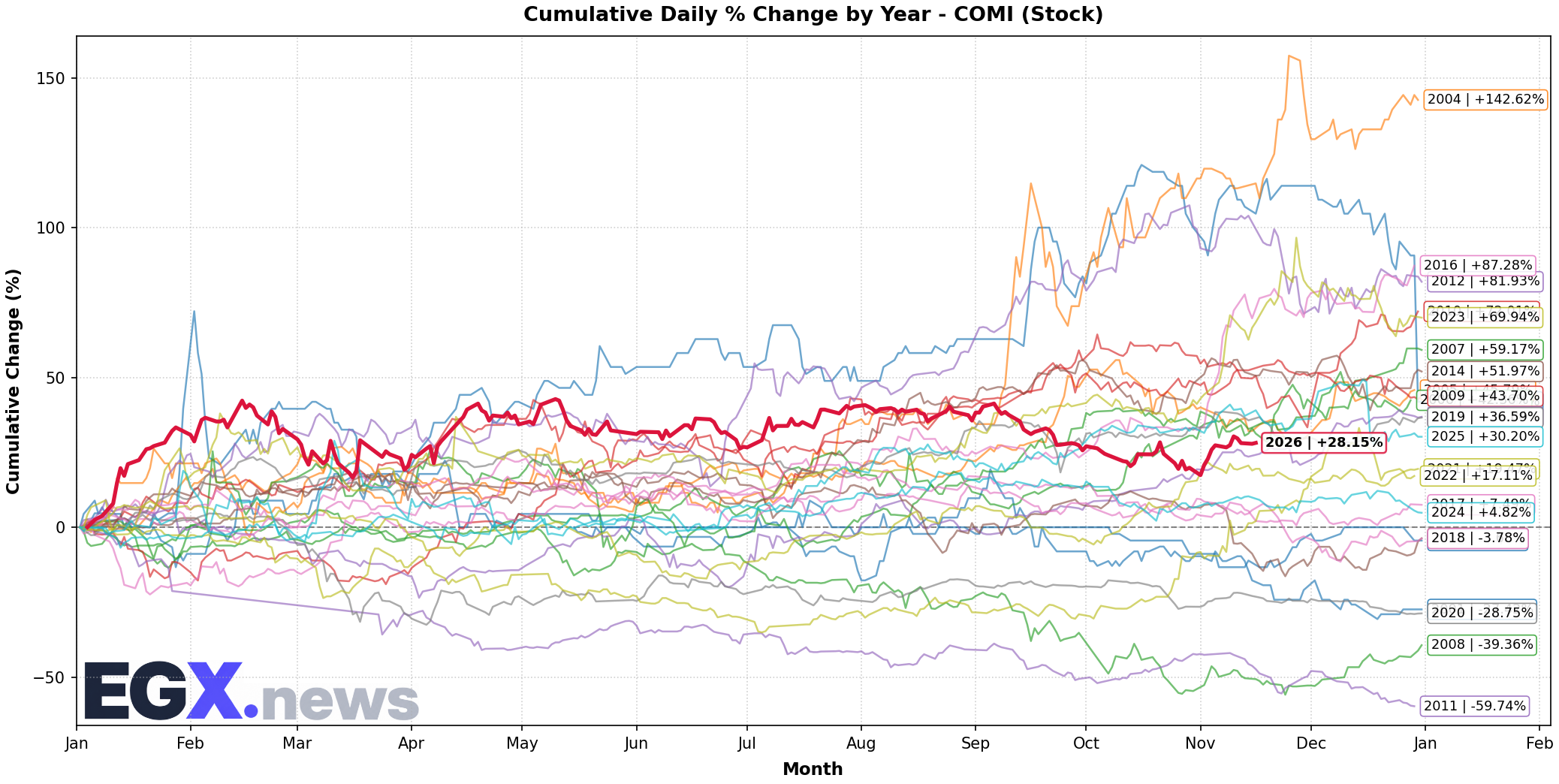
COMI leads banking activity on the Egyptian Exchange, recording trades exceeding 3.2 billion EGP this week, benefiting from the steady interest‑rate decision and widening financing margins. The bank’s strengths lie in its strong capital base, diversified loan portfolio, and robust demand for high‑yield deposits and certificates. Technically, the stock has maintained a medium‑term upward trend, supported by breaking above the 148 EGP resistance level and testing the 142 EGP support zone. High trading volume lends a bullish bias, provided domestic and foreign inflows continue.
#### 2. Taycon (TMGH)
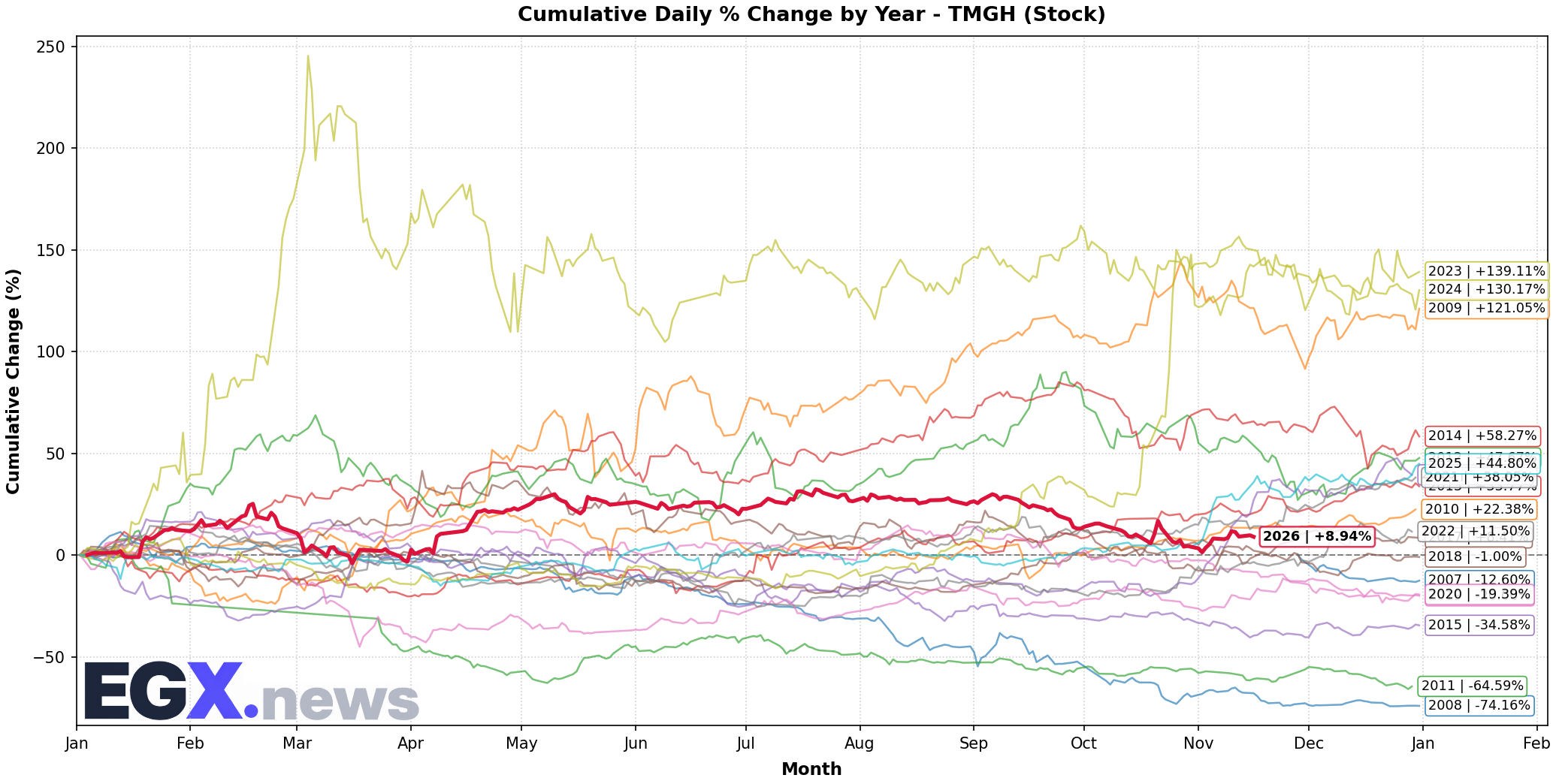
TMGH faces structural challenges from a draft law regulating real‑estate project financing and third‑party escrow accounts that would raise deposit requirements for small developers. The technical outlook shows rejection at the 24.60 EGP resistance level, with a short‑term downtrend after testing the 23.10 EGP low. The real‑estate sector overall is under pressure from weakening demand and limited liquidity, while TMGH remains a candidate for further correction unless regulatory policy shifts or sales prospects improve.
#### 3. Alexandria Petrochemicals (ABUK)
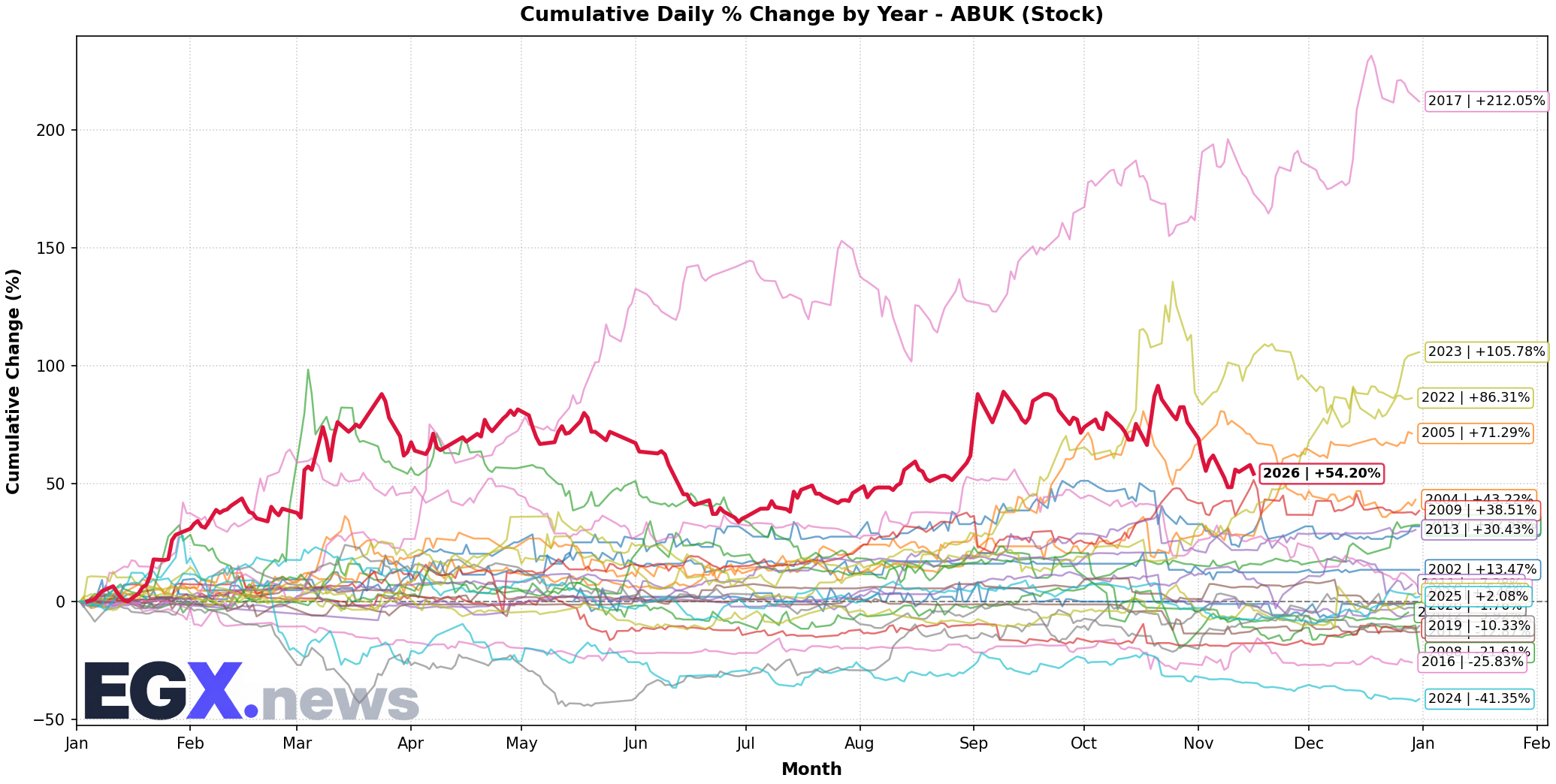
ABUK posted mixed performance amid stable global crude prices and constraints on local refining margins. The government’s decision to rationalize subsidies and increase reliance on domestic production opens revenue‑growth opportunities, yet exchange‑rate volatility and global interest‑rate fluctuations continue to affect costs. Technically, the stock trades around 45.30 EGP, with support at 43.80 EGP and resistance at 47.10 EGP. Limited foreign flows and a focus on government‑bond yields render ABUK a neutral option for investors seeking relative stability.
#### 4. Swedish Electric (SWDY)
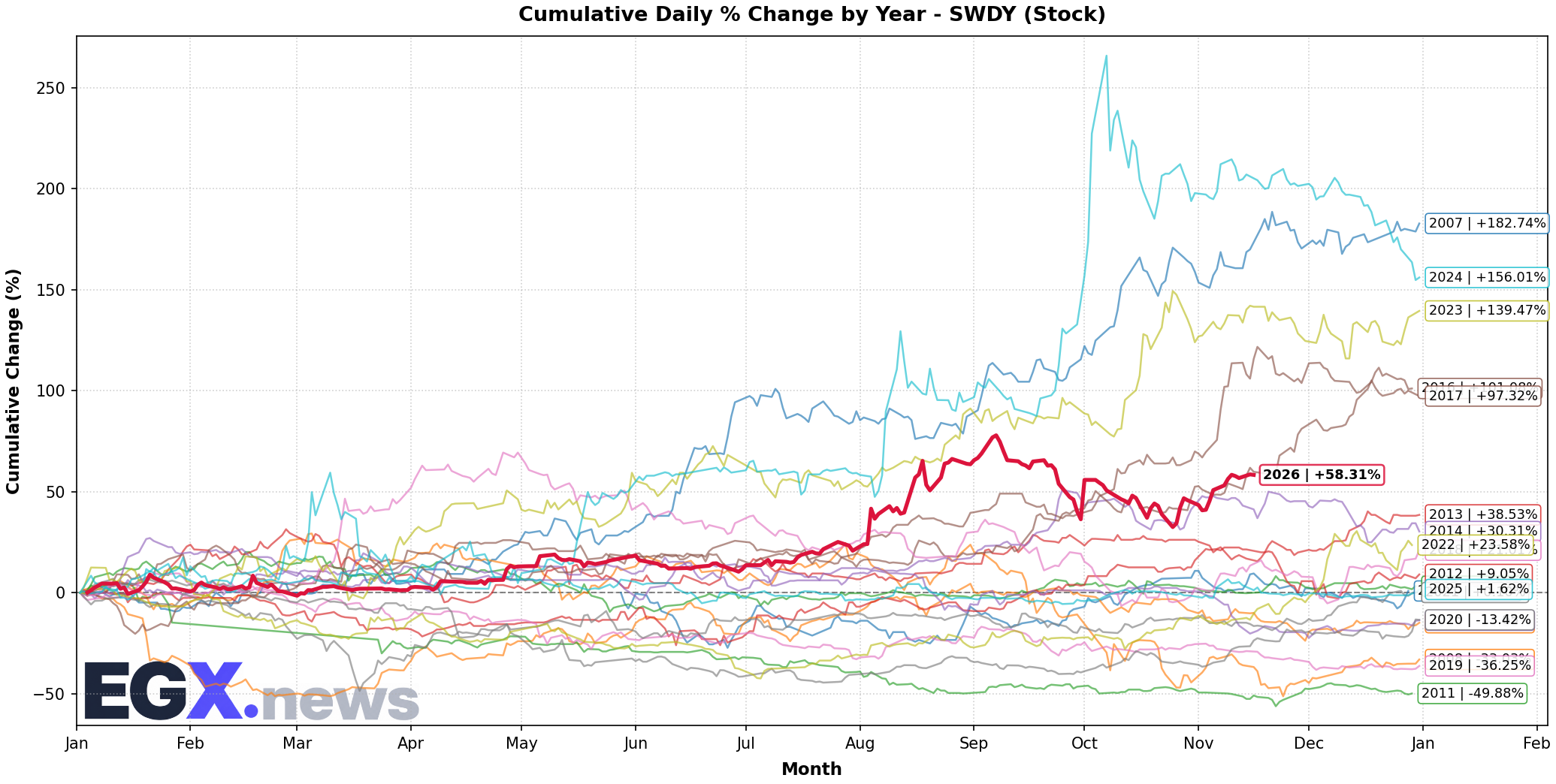
SWDY enjoys a diversified financing model combining bank loans and long‑term project contracts, tying it closely to interest‑rate movements and new legislative complexities. Last‑quarter financial results showed improved profit margins, but the sector faces pressure from rising financing costs and delays in major projects. Technically, the stock tests the 112.40 EGP resistance level, with support at 108.70 EGP. Exposure to energy‑expansion and green‑projects could provide structural backing if the state succeeds in attracting foreign investment into this sector.
Fourth: Opening Expectations and Watchlist
The upcoming session is expected to open with a slight decline in the main indices, with attention on dollar‑rate developments in banks and psychological levels around 52 EGP. Foreign flows toward government debt instruments may persist at the current pace, while locally‑priced equities could experience selling pressure absent strong stimuli from banks or new issues. For the EGX30, the opening range is anticipated between 54,000 and 54,500 points, barring sudden shifts in oil prices or U.S. data.
Domestically, investors will watch forthcoming inflation data and the pound’s performance in the free‑fx market, while interest rates remain unchanged at the current level, supporting the relative appeal of fixed‑income instruments. The banking sector is projected to remain the most liquid, with monitoring of any updates concerning dividend distributions or capital increases. Local gold tracks global movements, with the 21‑karat currently around 6,235 EGP, as investors rebalance portfolios between equities and the yellow metal as a hedge.
Fifth: Conclusion
In summary, the Egyptian market stands at a crossroads between regional pressures and dollar strength, versus opportunities arising from steady interest rates and enhanced liquidity in government instruments. Investors are poised to manage risk, focusing on bank performance and the stability of index support levels. Vigilant monitoring of liquidity shifts between treasury bills and equities, as well as real‑estate policy developments, will be crucial in determining market direction through the final quarter of 2026. Investors have the chance to adjust positions in line with expert warnings of widening downside in small‑cap stocks, while continuing to watch for selective opportunities in banking and energy sectors.
Live Egyptian Equities Coverage
Track real-time quotes, order book market depth, and quantitative technical analytics for all 299 listed companies.
Open Real-Time Market Terminal →