


Morning Review of the Egyptian Market: Analysis of Indicators and Economic Drivers - 29 September 2026
Morning Review of the Egyptian Market: Analysis of Indicators and Economic Drivers - 29 September 2026
Introduction: General Context of the Morning Session
With the Egyptian financial markets opening their doors on Tuesday morning, 29 September 2026, the atmosphere is shaped by a mix of domestic indicators and external factors that together outline expected volatility. This opening comes as the Central Bank of Egypt affirms steady interest rates, while the local currency shows limited movement against the dollar, and gold prices decline backed by a lower global ounce. Focus in this session is on key support and resistance levels of market indices, foreign and institutional fund flows, and indicators of sectors most sensitive to interest‑rate policy and the current geopolitical framework.
Macro‑economic Situation and Interest Rates
The Central Bank of Egypt held its monetary policy steady for the fifth consecutive meeting, postponing any steps or even greater clarity on inflation and growth prospects. The deposit and lending rates remain at 19% and 20% respectively, while government debt instruments retain high appeal with yields reaching up to 23.875% in recent auctions. This "steady for longer" stance aims to curb inflationary pressures stemming from international remittances and exchange‑rate movements, a period during which Egyptian banks continue to tie up around EGP 537 billion with the central bank – the highest tender since the start of the year.
On the exchange‑rate front, the US dollar traded around the EGP 50 level, slipping in some banks following the inflow of hot money, while certain banks quoted an average selling rate near EGP 51.80, and the central bank’s rate hovered around EGP 51.70 for buying. Rumors and moves in the FX market continue to influence investor appetite, especially amid fluctuating demand for safe‑haven assets.
Regarding gold prices, the ounce kept falling globally, trading below USD 4,200, which immediately reflected on the local market where a gram of 21‑carat gold slipped to around EGP 6,235, recording a cumulative decline exceeding EGP 130 over the past few weeks. This drop largely stems from the renewed strength of the US dollar and elevated US Treasury yields, which diminish the yellow metal’s allure as a store of value.
Performance of the Egyptian Exchange Indices
The main indices opened lower, with the EGX 30 reflecting a broad decline to close the previous session at its lowest level in two months, supported by net foreign and institutional outflows from blue‑chip stocks. The EGX 70, which comprises small‑ and mid‑cap shares, showed greater weakness, falling more than 2.89%, indicating selling pressure across diverse sectors.


Trading volume settled below EGP 350 million, indicating reduced liquidity compared with prior sessions, while institutional players acted cautiously and many firms postponed decisions on dividends or capital increases pending clearer indicators.
Analysis of Pivotal Stocks
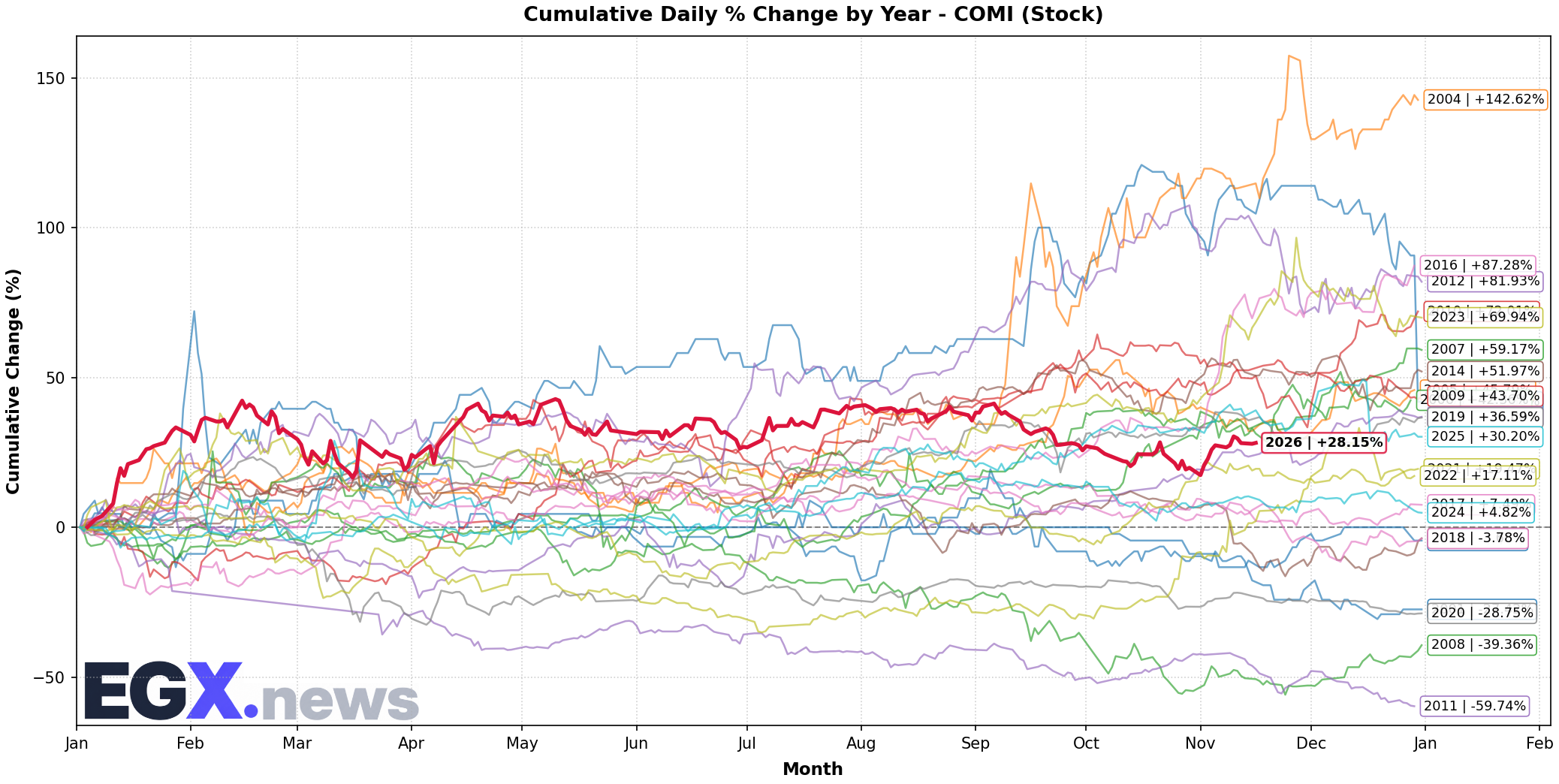
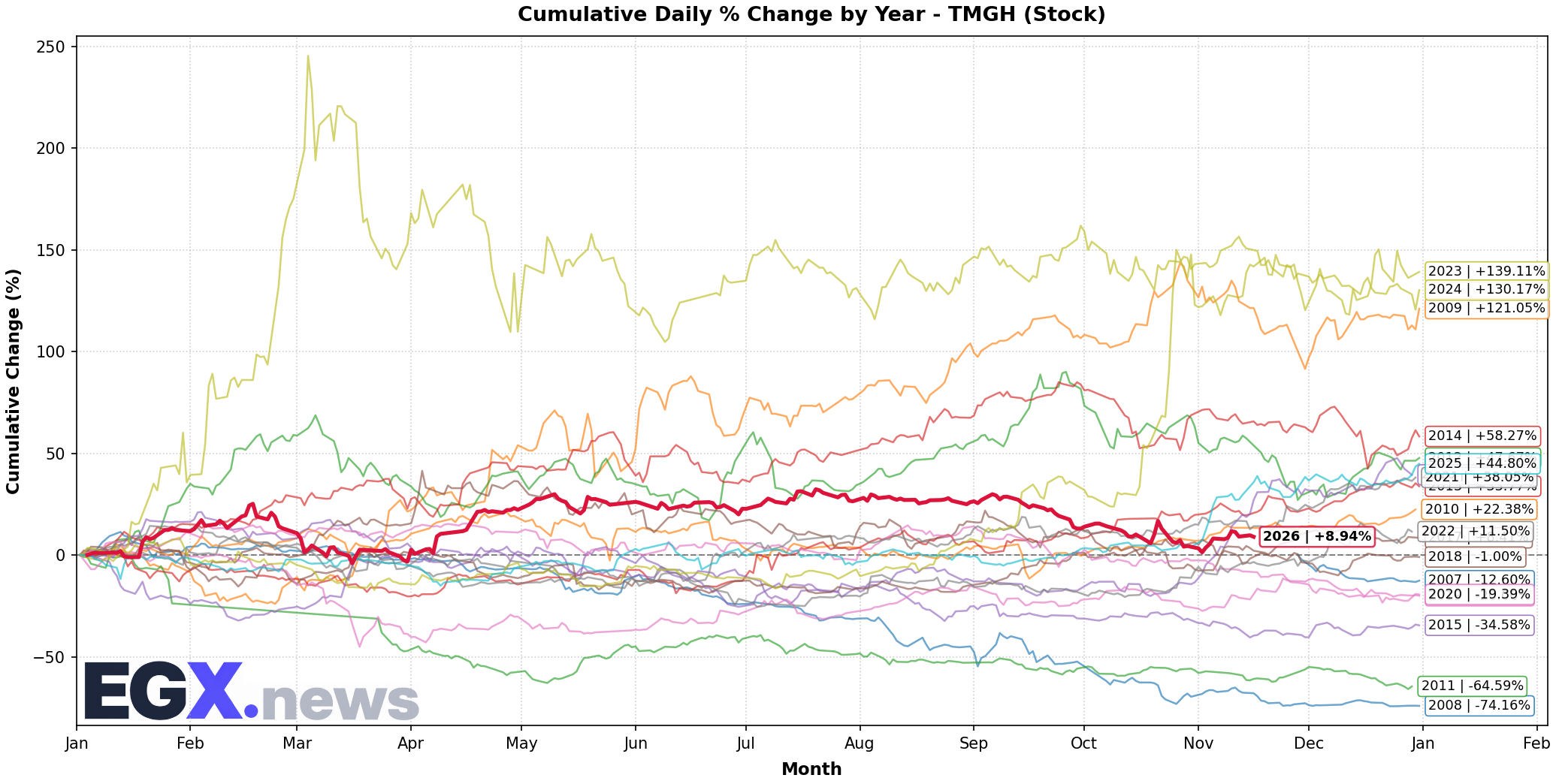
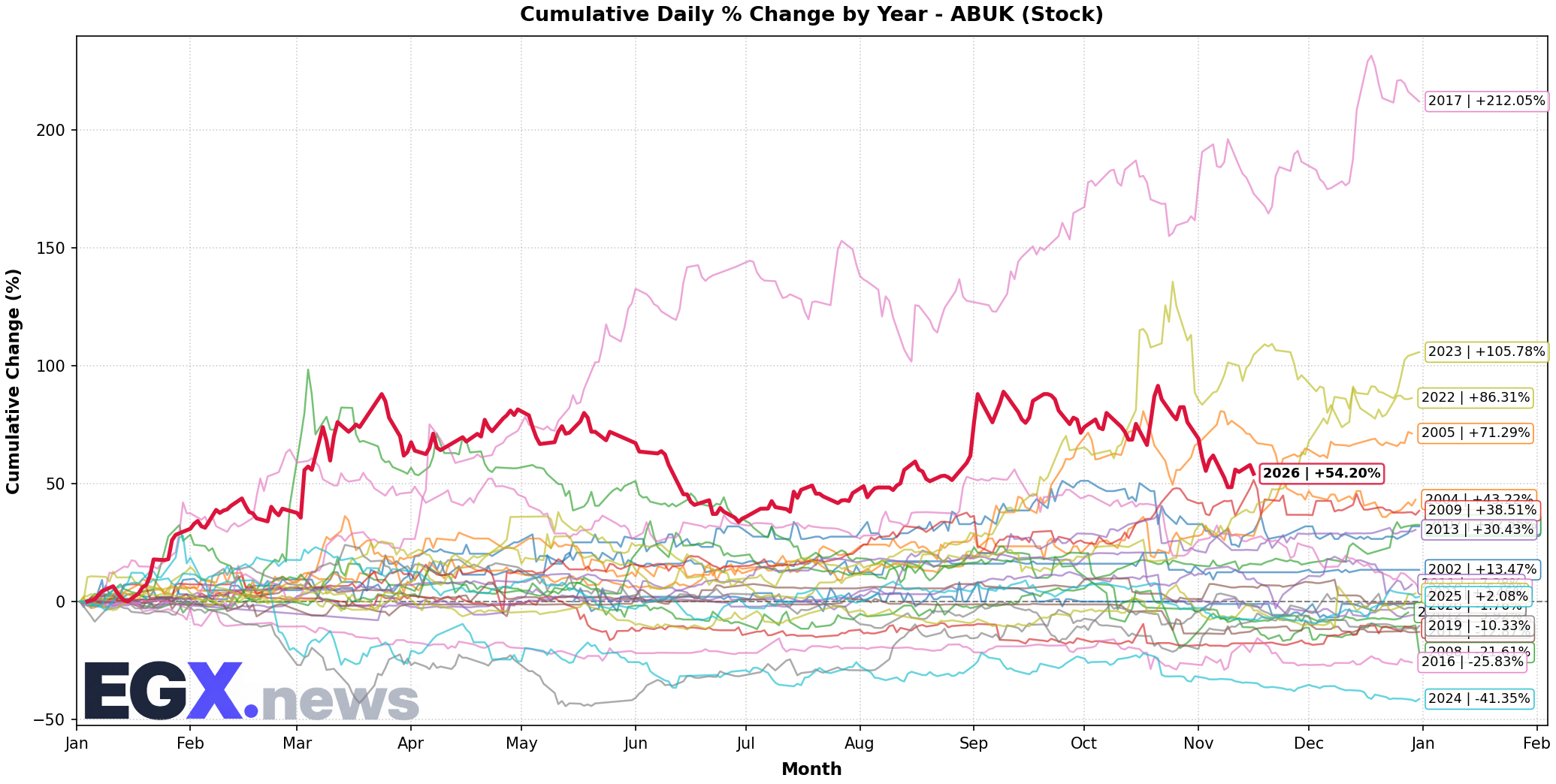
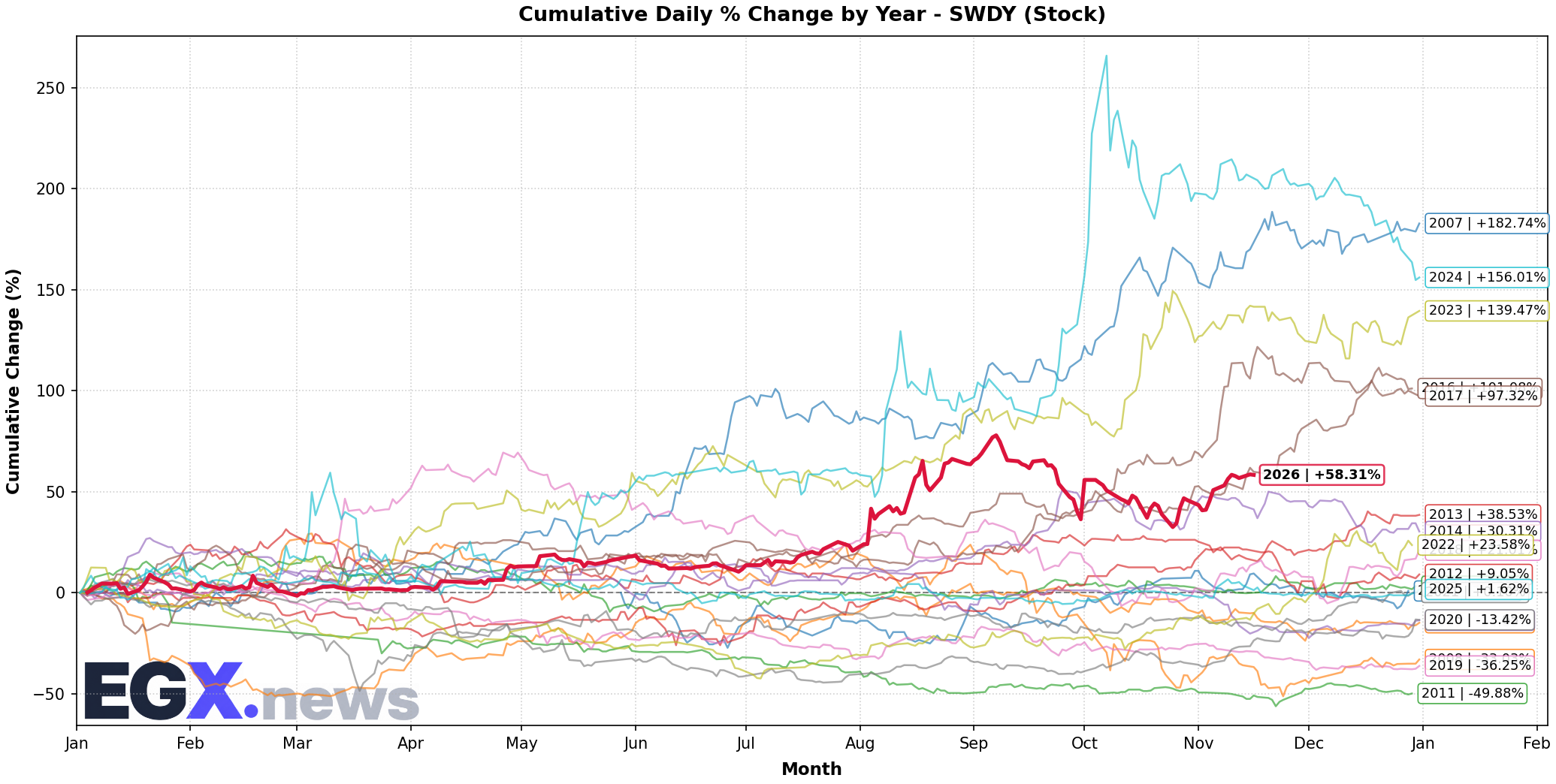
Focusing on the stocks that most influence market movement, attention turns to COMI, TMGH, ABUK, and SWDY, whose performance diverges sharply.
#### COMI (Commercial International Bank)
The CIB stock enjoys relative stability buoyed by the high‑interest‑rate environment, which enhances the bank’s net interest margin. Its strong capital base and ongoing digital transformation reinforce its capacity to absorb market volatility, while the share records buying interest from institutional investors seeking a safe haven within the banking sector.
#### TMGH (Talaat Moustafa Group)
The share faces pressure from elevated financing costs due to prevailing interest rates, coupled with weak demand for luxury residential units amid tightening credit conditions. Technical indicators point to a clear bearish signal, with further downside likely unless new projects or partnerships are announced to boost revenues.
#### ABUK (Abu Qir Cement)
The stock benefits from the diversified regional retail loan book and domestic demand for construction materials driven by ongoing government infrastructure projects. It remains a candidate for gradual upside should construction activity persist, though it stays exposed to energy prices and production costs.
#### SWDY (El Sewedy Electric)
The share is highly sensitive to oil price swings and exchange‑rate movements, especially given its orientation toward commodity‑linked projects and foreign‑currency‑denominated debt. Recent moves stem from selling pressure triggered by the weakening local currency, warranting close watch of the stock’s support levels in upcoming sessions.
Most Affected Sectors
The impact of interest‑rate policy and monetary steadiness varies across Egyptian sectors. Banking and financial services emerge as the most positively affected, benefiting from widened margins, whereas real‑estate, hospitality, and tourism sectors confront pressure from eroded purchasing power and currency volatility. Mining and energy exhibit expected fluctuations tied to global commodity prices and Middle‑East geopolitical developments, while food and beverages appear relatively resilient, supported by steady domestic demand.
Banks and financial services capture the largest share of trading liquidity, reflecting investor loyalty to this sector in a high‑rate environment. Liquidity data show that this sector alone accounts for more than 10% of total turnover, making it a cornerstone of overall market health.
Session Opening Outlook
The morning session is expected to open with limited volatility within a narrow range, with a slight bearish bias unless surprise stimulative cues appear. The EGX 30 is likely to oscillate around the 54,500‑point level, while the EGX 70 may stay below the 2,200‑point mark. Market participants will watch forthcoming international inflation data, central‑bank liquidity reports, and FX and gold movements.
From a technical standpoint, analysts await a break of the EGX 30’s main support near 54,200 points; a breach could extend the decline toward 53,800 points. Conversely, holding above 54,800 points with rising trade volume might signal the start of an upward correction backed by fresh inflows into COMI and other banking stocks.
Conclusion
In summary, the Egyptian market remains in a state of watch‑and‑evaluate, weighing potential gains against risks posed by geopolitical tensions, the persistence of a steady‑rate policy, and exchange‑rate fluctuations. Sector outlooks diverge: banking stands as a pole of relative stability, while other areas demand greater caution and vigilant monitoring of macro‑indicators. The forthcoming session is anticipated to shed more light on liquidity trends and institutional flows, pending any shifts in the central bank’s stance or international developments that could pave the way for a corrective bounce or a continuation of the downward track.
Live Egyptian Equities Coverage
Track real-time quotes, order book market depth, and quantitative technical analytics for all 299 listed companies.
Open Real-Time Market Terminal →