


Morning Preview of the Egyptian Exchange: Analysis of Indicators and Leading Stocks - 15 October 2026
Morning Preview of the Egyptian Exchange: Analysis of Indicators and Leading Stocks - 15 October 2026
Introduction
The morning session of the Egyptian Exchange is showing noticeable volatility under the influence of rising global pressure from a stronger US dollar and inflation data that exceeded expectations. Although limited upward movements were recorded in the first minutes, overall momentum remains weak and marked by thin institutional liquidity. This analysis focuses on reading the main indicators, support and resistance levels, and the impact of macro‑level catalysts on selected leading stocks (COMI, TMGH, ABUK, SWDY), with a look at the session‑opening outlook.
---
Indicator Analysis
EGX30 Index

The EGX30 index steadies around the 51,200‑point level after a modest bounce from a low near 49,700 points recorded in yesterday’s session. The chart shows a narrow descending channel with long upper wicks indicating selling pressure on each attempt to break above 51,800 points.
- Immediate support: 50,900 points
- Immediate resistance: 51,800 points
- 20‑day moving average: 51,450 points (indicates a neutral‑to‑negative bias)
"Staying below 51,800 points would retest the 50,500–50,900‑point zone as a potential accumulation area before any sustainable upside attempt."
EGX70 Index

The EGX70 index displayed a sharper decline, currently trading at 21,400 points after breaking a psychological support at 22,000 points. The decline is accompanied by higher selling volumes on small‑ and mid‑cap stocks, reflecting a shift toward risk reduction.
- Immediate support: 20,800 points
- Immediate resistance: 22,000 points
- 50‑day moving average: 21,750 points (trending down)
"Holding below 22,000 points opens the door to target secondary support levels of 20,500–20,800 points, with a chance of a bounce if buying volume returns."
Performance Comparison
| Indicator | Approx. Close Level | Immediate Support | Immediate Resistance | Short‑Term Trend |
|---|---|---|---|---|
| EGX30 | 51,200 | 50,900 | 51,800 | Neutral to Negative |
| EGX70 | 21,400 | 20,800 | 22,000 | Negative |
---
Leading Stocks Analysis
Commercial International Bank (COMI)
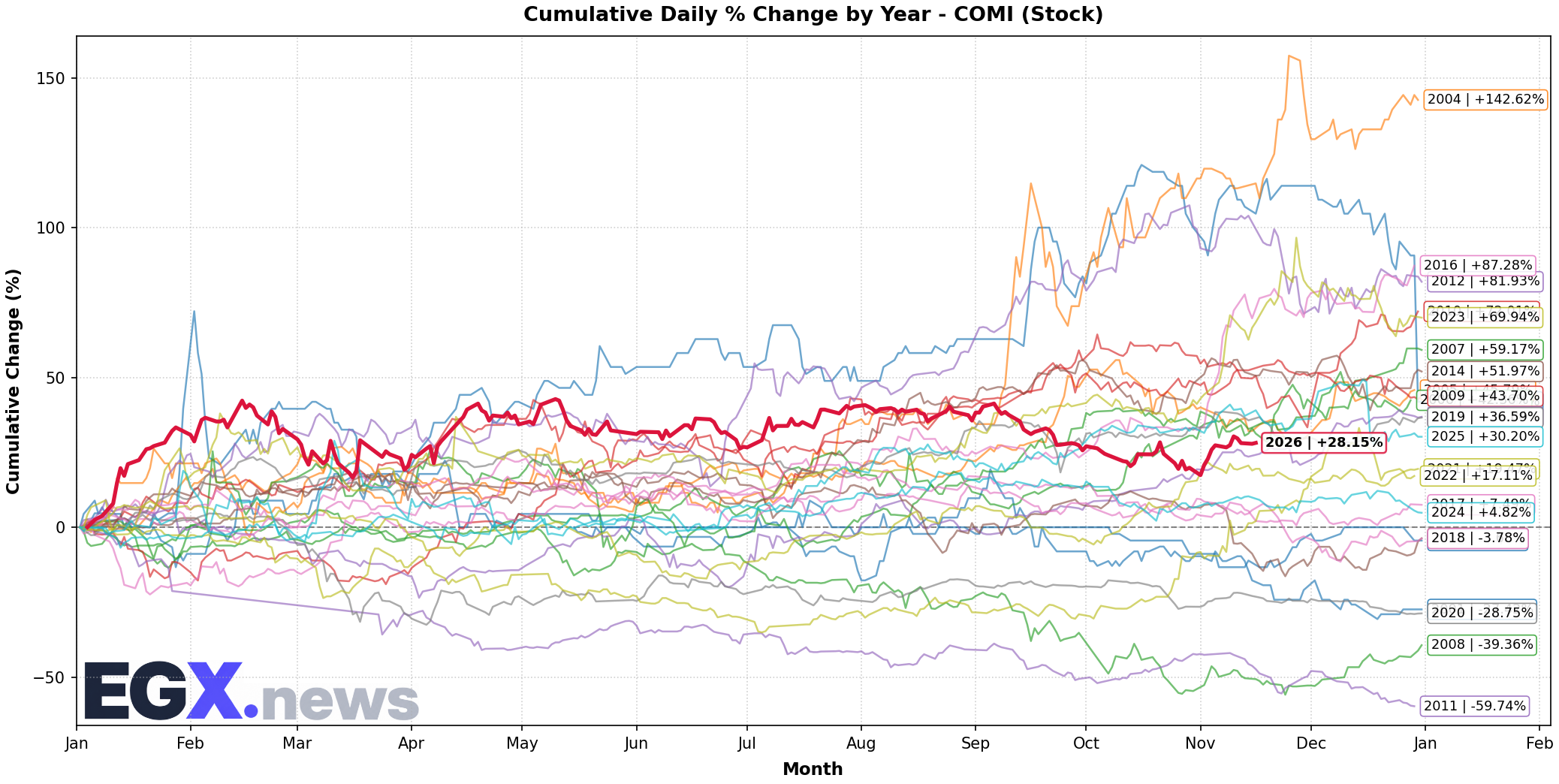
COMI benefits from a strong deposit base and diversified income streams (credit, banking services, money markets). The stock is currently trading at EGP 84.5 after a bounce from support at EGP 82.0.
- Key support: EGP 80.0
- Key resistance: EGP 88.0
- 20‑day moving average: EGP 83.2 (indicates a technical bounce)
"Respecting the EGP 80.0 level gives a positive signal to target EGP 88.0 as an initial objective, provided domestic liquidity flows continue and credit outlook improves."
Talaat Mustafa Group (TMGH)
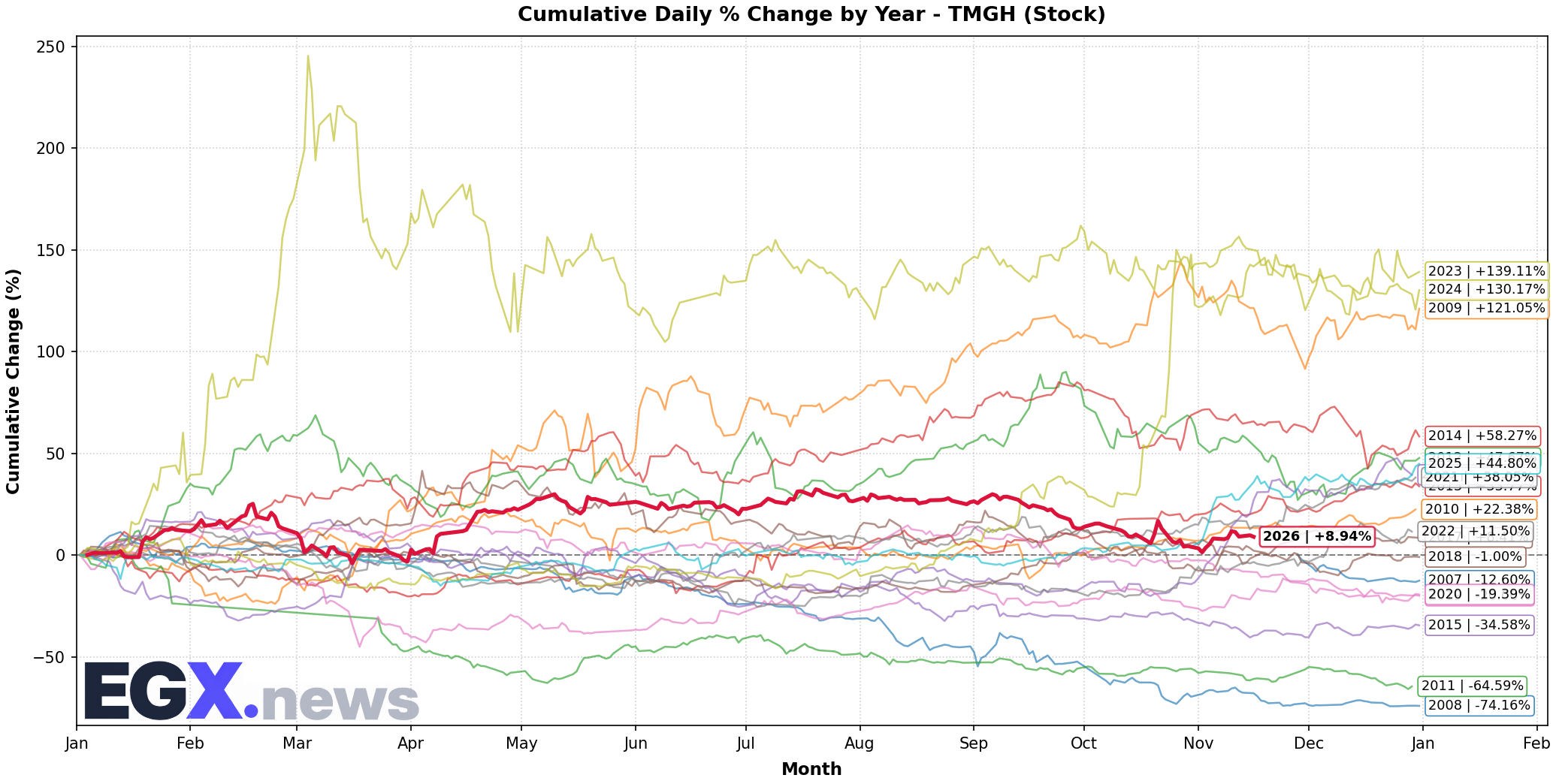
TMGH faces slowing presales and higher financing costs due to rising borrowing rates. The stock is slipping toward EGP 21.0 after breaking support at EGP 22.5.
- Immediate support: EGP 20.0
- Immediate resistance: EGP 22.5
- 50‑day moving average: EGP 21.8 (sloping downward)
"Staying below EGP 20.0 could trigger an additional sell‑wave targeting EGP 18.5–19.0, while any bounce above EGP 22.5 would require higher trading volume to confirm momentum."
Abu Qir Fertilizers & Chemical Industries (ABUK)
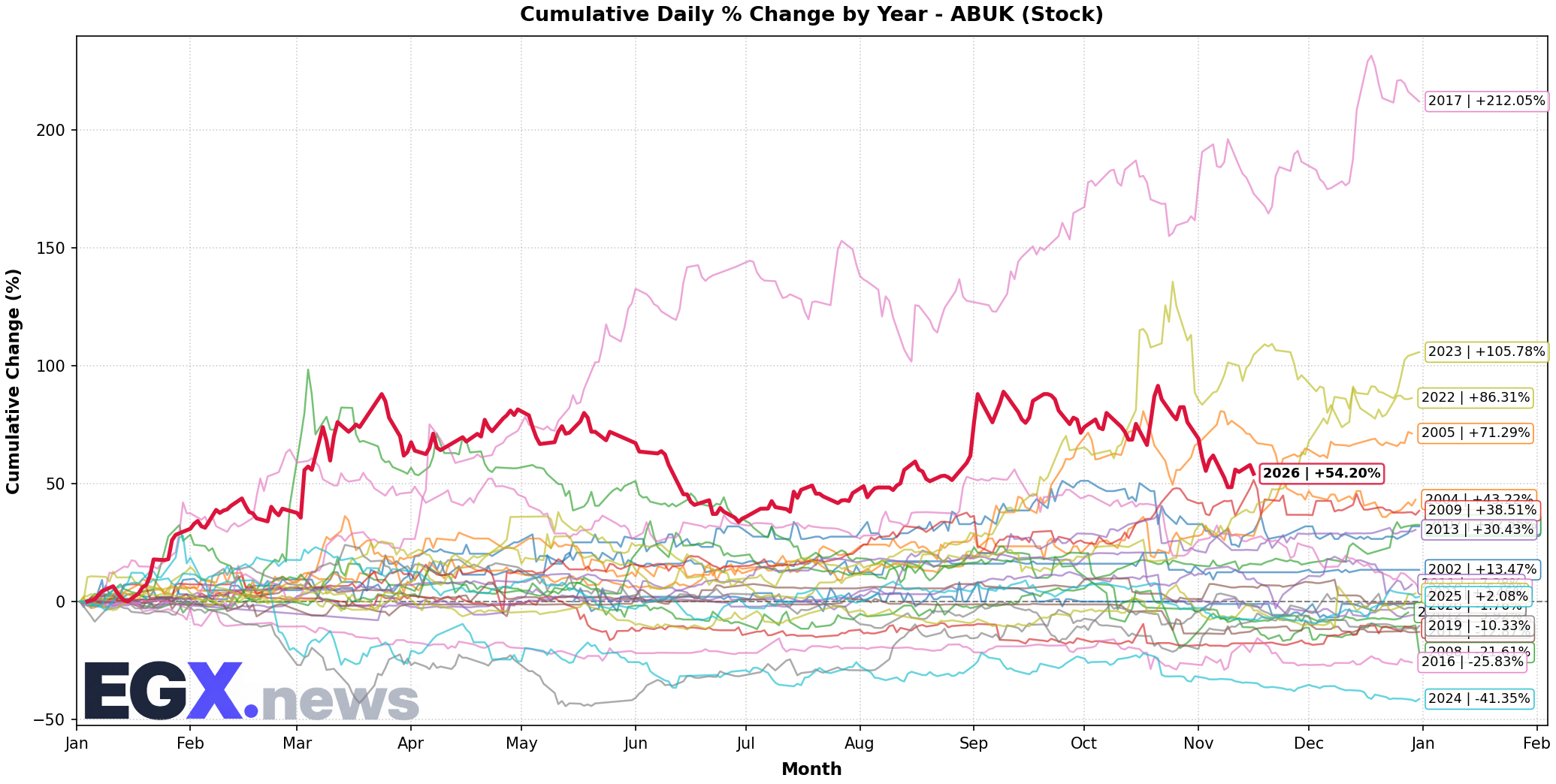
ABUK enjoys steady domestic and foreign demand for fertilizers and recently benefited from a protocol to expand financing for mining projects with the Ministry of Petroleum. The stock trades at EGP 56.0 after testing support at EGP 54.5.
- Key support: EGP 53.0
- Key resistance: EGP 60.0
- 20‑day moving average: EGP 55.4 (weakly positive)
"Stability above EGP 53.0 opens a path toward testing EGP 60.0 as a medium‑term target, while monitoring the impact of global energy prices on production costs."
Elsewedy Electric (SWDY)
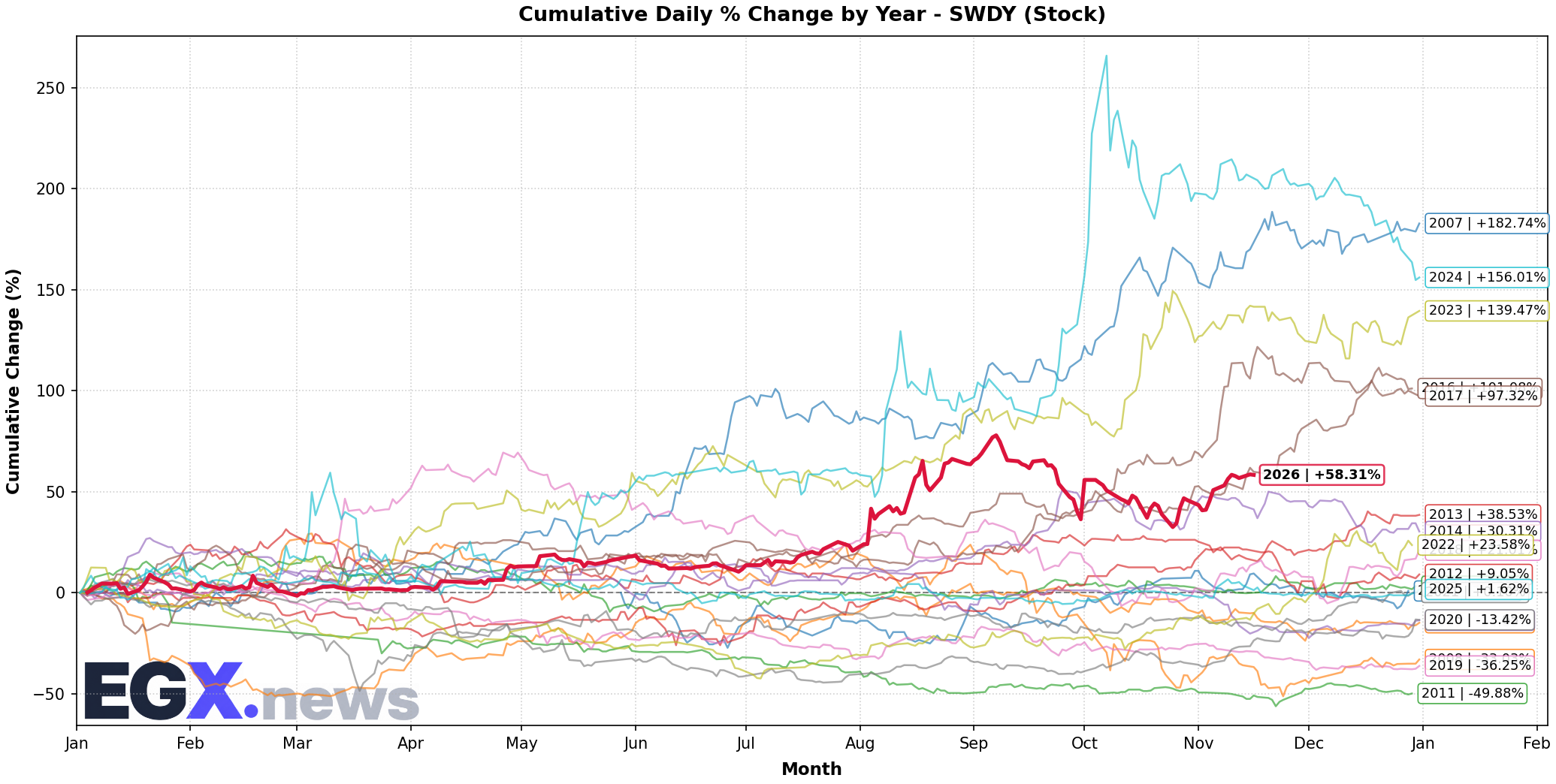
SWDY gains from rising demand for cables in energy and infrastructure projects, especially after the launch of the Egypt‑Saudi interconnection. The stock trades at EGP 38.2 after a bounce from support at EGP 36.5.
- Immediate support: EGP 35.0
- Immediate resistance: EGP 40.0
- 20‑day moving average: EGP 37.6 (neutral)
"A sustained break above EGP 40.0 could shift the short‑term trend upward, while falling below EGP 35.0 raises the risk of testing EGP 32.0–33.0."
Stocks Comparison Table
| Stock | Current Price | Key Support | Key Resistance | Short‑Term Trend |
|---|---|---|---|---|
| COMI | EGP 84.5 | EGP 80.0 | EGP 88.0 | Neutral to Positive |
| TMGH | EGP 21.0 | EGP 20.0 | EGP 22.5 | Negative |
| ABUK | EGP 56.0 | EGP 53.0 | EGP 60.0 | Neutral to Positive |
| SWDY | EGP 38.2 | EGP 35.0 | EGP 40.0 | Neutral |
---
Macro‑Level Catalysts
1. US Monetary Policy – Continued rise in the US CPI above expectations kept pressure on the Fed to maintain higher interest rates for longer, boosting the dollar’s appeal and prompting outflows from emerging markets, including Egypt.
2. Local Exchange Rate – The dollar is approaching EGP 53.00 for sale in banks, with limited fluctuation between EGP 52.60–52.80. This rise increases import costs and squeezes profit margins for firms heavily reliant on imported goods.
3. Energy Prices – Despite a slight dip in global oil prices, Middle‑East geopolitical tensions keep a risk premium on supplies via the Suez Canal, which may support revenues for the local transport and energy sectors.
4. Government Initiatives – Signing a protocol to expand financing for mining projects and cooperation between the Ministry of Petroleum and the General Authority for Investment aims to attract direct investment into the metals sector, a factor that could enhance performance of stocks such as ABUK.
5. Cairo Bank Private Placement – The bank’s intention to offer 30% of its shares on the Egyptian Exchange in November may provide a temporary liquidity boost to the banking sector and indirectly affect COMI through improved sentiment toward financial stocks.
"The interplay of these factors creates an environment of limited volatility with a bias toward weakness, requiring investors to focus on stocks with strong fundamentals and sufficient liquidity to absorb shocks."
---
Session‑Opening Expectations
Based on the technical analysis and the catalysts mentioned, the session is expected to open flat to slightly negative:
- EGX30: Likely to test the 51,000–51,300‑point range as a consolidation zone, with initial resistance at 51,800 points. A clear break above this level would need trading volume above the daily average of around EGP 7.3 billion.
- EGX70: Expected to trade within the 20,800–21,500‑point channel, with a risk of breaking support at 20,800 points that could push the index toward 20,400–20,600 points.
- Leading stocks:
- COMI may fluctuate between EGP 83.0–86.0 with a slight upward tilt if liquidity holds at the EGP 80.0 support.
- TMGH remains under pressure, with a chance to test EGP 20.0–20.5 as short‑term support.
- ABUK could steady between EGP 55.0–57.0 on any positive news about mining or fertilizers.
- SWDY is likely to move in the EGP 37.5–39.0 range, watching the EGP 40.0 resistance level.
The suggested strategy for conservative investors is to focus on stocks that respect core support levels and avoid excessive exposure to interest‑rate‑ and exchange‑rate‑sensitive sectors such as construction and real‑estate development.
---
Summary and Recommendations
The data indicate that the Egyptian Exchange remains under strong external pressure from a stronger US dollar and US inflation concerns, leading to thin liquidity and a flat‑to‑negative bias in the main indices. Nevertheless, selective opportunities exist in stocks with solid balance sheets that benefit from supportive government policies (COMI, ABUK) or from specific infrastructure projects (SWDY). Investors are advised to:
1. Monitor key support levels for each stock and refrain from initiating new long positions until stability is confirmed over multiple sessions.
2. Use stop‑loss orders prudently to limit potential losses in case of sudden support breaks.
3. Focus on stable‑return sectors such as banking and chemicals, and avoid high‑beta sectors like real estate in a high‑cost‑of‑financing environment.
4. Track US inflation data and Fed actions as critical indicators for shifts in capital flows toward emerging markets.
5. Consider geographic diversification via limited exposure to government debt instruments or investment funds with yields if equity pressure intensifies.
By adhering to these principles, investors can reduce risk and position themselves to benefit from any technical rebound should macro‑stability improve or strong local catalysts emerge.
Live Egyptian Equities Coverage
Track real-time quotes, order book market depth, and quantitative technical analytics for all 299 listed companies.
Open Real-Time Market Terminal →